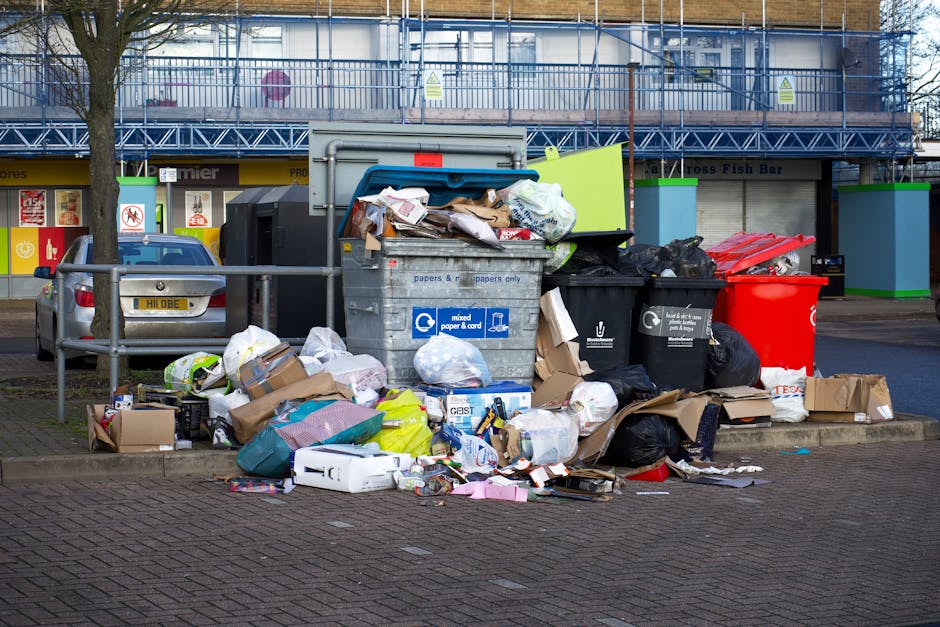
Rubbish removal Brent Cross Shopping Centre NW4

If you need rubbish removal Brent Cross Shopping Centre NW4, you are probably dealing with a familiar kind of mess: packaging after a refit, broken office furniture, end-of-tenancy clutter, shop waste, or simply too much stuff piling up at the wrong time. Around a busy retail hub like Brent Cross, speed, access, and cleanliness matter just as much as getting rid of the waste itself. The last thing you want is a corridor blocked with bags, a delivery bay held up, or a clearance job dragging into the middle of the day.
This guide explains how the service works, who it suits, what to look out for, and how to keep the process smooth and compliant. You will also find practical tips, a comparison table, a checklist, and a realistic example so you can make a sensible decision without the usual guesswork.
Why Rubbish removal Brent Cross Shopping Centre NW4 Matters
Brent Cross is not the kind of place where waste can be left to sit around. It is busy, visible, and constantly moving. Whether the rubbish comes from a retail unit, a commercial fit-out, storage clear-out, or an office refresh, clutter quickly becomes more than an eyesore. It can affect access, create trip hazards, interfere with fire routes, and slow down day-to-day operations.
In a shopping-centre setting, timing is often the real issue. Loads may need to be moved early, late, or in a tight window between customers, deliveries, and staff changes. That means the removal process has to be organised, not casual. A decent service does more than lift heavy items. It plans the job properly, handles loading efficiently, and leaves the area swept and ready. Simple enough in theory. In practice, not always.
There is also a reputation angle. Shoppers notice mess. Staff notice mess. Management notices mess. And let's face it, nobody wants a pile of old cardboard, damaged displays, or worn-out seating sitting beside a busy walkway because "it will be sorted later". If the waste is in the way, it affects how the place feels. Clean spaces feel calmer and more professional.
If you are handling business waste as part of a wider commercial operation, it can help to review business waste removal alongside the clearance itself, especially if your rubbish includes recurring packaging, store-room debris, or mixed commercial waste.
How Rubbish removal Brent Cross Shopping Centre NW4 Works
At its core, rubbish removal is a straightforward service: you show what needs to go, the team loads it, and the waste is taken away for sorting, recycling, or disposal. The details matter, though, because a commercial location near Brent Cross comes with access rules, security considerations, and often a need to work around customers or neighbouring units.
Most jobs follow a simple flow. First comes the enquiry or booking. Then the provider will usually ask what type of waste you have, roughly how much there is, and whether there are any difficult items such as fridges, heavy furniture, or hazardous materials. That part is worth doing carefully. A quick photo on your phone can save a lot of back-and-forth. Honestly, it can save a lot of sighing too.
On the day, the team arrives at the agreed time, checks access, confirms the load, and begins removal. For larger jobs, the clearance may be done in stages. For smaller ones, it can be very fast. A good crew will protect floors where needed, work safely around staff and visitors, and separate items for recycling where possible. If the rubbish includes mixed materials, it may be sorted later at an approved facility. You do not usually need to manage that side yourself, but you should always know what the service is taking and what it will not take.
For bulky household-style items in mixed loads, related services can also be useful. For example, if a unit or staff area contains worn seating or old fixtures, furniture clearance and furniture disposal may be a better fit than a general catch-all collection.
A sensible provider will also talk plainly about how waste is handled, which is why it is worth looking at recycling and sustainability if you want a clearer picture of what happens after collection.
Key Benefits and Practical Advantages
The biggest benefit is obvious: you get your space back. But the practical advantages go further than that. Good rubbish removal helps commercial areas stay functional, presentable, and safer to work in. That matters in a setting where people are passing through all day.
- Fast turnaround: Less time waiting for clutter to disappear means less disruption to operations.
- Better presentation: Clean, clear areas look more professional to customers and staff.
- Reduced manual labour: You do not need your own team lifting awkward or heavy items.
- Improved safety: Removing loose rubbish reduces slips, blocked routes, and stacked hazards.
- More flexible than a skip in some cases: For tight or busy sites, a load-and-go service can be simpler.
- More suitable for mixed waste: You can clear different materials in one visit rather than splitting jobs.
There is another advantage that gets overlooked: peace of mind. A clearance arranged properly means you are not wondering whether the waste has been handled responsibly or whether the job will cause a fuss later. That feeling is worth something. Especially on a Monday morning when the unit already has enough to deal with.
For larger or ongoing commercial jobs, it can also make sense to review general waste removal options so you can match the service to the pace of your business rather than forcing a one-size-fits-all approach.
Who This Is For and When It Makes Sense
This type of service is useful for a wide range of people and organisations. The obvious ones are shops, offices, and retail units, but the list is bigger than that. In and around Brent Cross, jobs often come from people managing busy commercial space, temporary storage, back rooms, staff areas, or even residential properties nearby that need a fast clear-out after renovations.
You may need rubbish removal if you are:
- refitting a retail unit or changing seasonal displays
- clearing packaging after stock deliveries
- disposing of broken or outdated furniture
- emptying an office, stockroom, or archive area
- dealing with waste after builders or decorators have finished
- removing bulky appliances that cannot simply be bagged up
- sorting mixed rubbish before a handover or inspection
It also makes sense if you need a one-off clearance rather than a long-term arrangement. Some people only need help once, maybe after a move or a major tidy-up. Others need repeat support because waste builds up quickly in a commercial environment. Both situations are valid. The important thing is to choose a service that fits the actual job instead of overcomplicating it.
If the rubbish is tied to a renovation or fit-out, builders waste clearance may be the more accurate route. If it is office-based, office clearance is usually more relevant, especially where desks, chairs, filing, and general equipment are involved.
And if you are clearing a private property or a mixed-use space nearby, options like home clearance, house clearance, flat clearance, loft clearance, garage clearance, and garden clearance may fit better than a generic waste job. Sometimes the labels matter more than people expect.
Step-by-Step Guidance
Here is the simplest way to approach a rubbish removal job without making it harder than it needs to be.
- Identify exactly what needs removing. Walk through the space and separate general waste, bulky items, recyclable material, and anything potentially restricted.
- Check access. Look at lifts, loading points, parking restrictions, narrow corridors, security requirements, and time windows. In a busy retail area, this step matters more than people think.
- Take clear photos. A few good images usually help more than a vague description. If there are awkward items, show them from a couple of angles.
- Ask what is included. Make sure the quote covers labour, loading, transport, and any likely extras. No one likes surprises after the van has gone.
- Confirm restricted items. Some waste streams need special handling, particularly appliances, confidential material, and anything classed as hazardous.
- Prepare the site. Move small loose items out of the way, keep routes clear, and make sure staff know when the team is coming.
- Supervise the handover. A quick walkthrough at the start can prevent misunderstandings. A quick walkthrough at the end is even better.
- Keep records. For business jobs, retain the booking details or any paperwork provided. It is just good housekeeping.
If your waste includes fridges, freezers, or other machines, it is better to treat them separately rather than mixing them into a normal load. The dedicated fridge and appliance removal service is designed for exactly that kind of item.
For heavy, awkward, or extremely mixed loads, you may also want to review what can go in a skip so you can compare practical options before you commit to one method. Sometimes the answer is not obvious until you look at the waste itself.
Expert Tips for Better Results
Small decisions make a big difference. In our experience, the jobs that go smoothly usually have the same quiet habits behind them: good information, clear access, and realistic expectations.
- Group items by type before collection. Even a rough sort can speed things up and reduce handling time.
- Keep walkways open. The team should not have to weave through stacks of boxes like they are in a storage maze.
- Be honest about quantity. If you think there are two loads, say so. If it might be one and a half, say that too.
- Flag difficult items early. Heavy counters, old sofas, appliances, and broken fixtures need planning.
- Choose the right time slot. Early or off-peak collections can be far easier around retail traffic.
- Ask about recycling. A responsible provider should be able to explain how different materials are separated or recovered.
One practical trick: when you are not sure whether something counts as rubbish, furniture, appliance waste, or general clearance, write down the item list before you call. It sounds basic, but it keeps the conversation clear and saves you from that awkward "oh, and there were two more things" moment halfway through.
For items that are soft, bulky, and not especially valuable, the specialist page for mattress and sofa disposal may be the cleaner choice. It is one of those categories people often overlook until the van arrives and everyone starts pointing at the same saggy corner sofa.
Common Mistakes to Avoid
A lot of clearance problems come from simple assumptions. The good news is that most of them are avoidable.
- Leaving access planning until the last minute. A tight loading bay or restricted entrance can derail even a simple job.
- Booking the wrong type of service. Not all waste is equal. Builders' rubble, office waste, and appliance disposal often need different handling.
- Forgetting about restricted materials. Hazardous or specialist items should never be treated as ordinary rubbish.
- Underestimating the volume. A small pile can become a van full very quickly once items are broken down.
- Mixing confidential waste into general rubbish. Paper records and sensitive material should be handled separately.
- Assuming everything will be recycled automatically. Recycling depends on the waste type and the condition of the materials.
One more thing: do not assume all "quick clearance" offers are the same. Some are excellent. Some are, well, a bit optimistic. Ask for a clear description of what is included and how the removal will be managed. That question alone can save you a lot of hassle.
If the job involves documents or archived files, consider confidential shredding rather than dropping sensitive papers into a general clearance. It is a small step, but an important one.
Tools, Resources and Recommendations
You do not need a toolbox full of equipment to organise rubbish removal properly, but a few simple resources help a great deal.
- Phone camera: Clear photos of the waste and access point make quoting and planning much easier.
- Basic tape measure: Handy for doors, lifts, stairwells, and awkward furniture.
- Marker labels or sticky notes: Useful if you are separating items for reuse, disposal, or recycling.
- Floor protection: Cardboard, dust sheets, or protective mats can help in sensitive indoor areas.
- Contact list: Keep site managers, security, or facilities contacts on hand if access changes suddenly.
From a planning point of view, the most useful pages are often the practical ones. If you are checking budget, pricing and quotes can help you prepare better questions. If you want to understand the business behind the service, about us is a sensible place to learn more. And if you already know what you need, book online can be a straightforward next step.
For business users, it is also worth reading payment and security so you know what to expect before confirming a collection. That sort of detail sounds boring until it suddenly matters.
Law, Compliance, Standards, or Best Practice
Waste clearance in the UK is not just a matter of loading a van and driving off. Businesses have a duty of care to make sure their waste is handled by a suitable carrier and transferred responsibly. You do not need to be a legal specialist to understand the basic point: if you are producing the waste, you still need to think about what happens to it.
For commercial premises around Brent Cross, best practice usually includes:
- checking that the service can handle the waste type you have
- keeping a record of the collection or disposal details
- separating hazardous items from general waste
- protecting staff and visitors during the clearance
- making sure access routes and fire exits stay clear
Health and safety matters too. Heavy lifting, broken glass, sharp edges, and awkward loads all create avoidable risks if the job is rushed. A proper provider should have sensible procedures in place. If you want to understand the standards a company works to, the pages on health and safety policy and insurance and safety are worth a look.
For specialised waste, do not improvise. hazardous waste disposal is not a box-ticking exercise; it is a separate responsibility because the materials involved may need different handling altogether. Keep it simple, keep it separate, and ask questions if you are not sure. That is just good practice.
Finally, if your organisation cares about ethical operations and responsible supply chains, the modern slavery statement and the site's wider sustainability approach can help demonstrate that the service sits within a more considered business framework. Not glamorous reading, admittedly. But useful.
Options, Methods, or Comparison Table
There is more than one way to handle rubbish near Brent Cross. The best choice depends on waste type, space, timing, and how much disruption you can tolerate. Here is a practical comparison.
| Method | Best for | Pros | Trade-offs |
|---|---|---|---|
| On-site rubbish removal | Mixed loads, bulky items, urgent clearances | Fast, flexible, labour included | May cost more than self-managed options for very small jobs |
| Skip-based clearance | Longer projects, predictable waste streams | Useful for ongoing debris, easy to fill gradually | Needs space, permits may be relevant, not ideal for tight retail access |
| Specialist item disposal | Appliances, sofas, mattresses, confidential waste | More appropriate handling, clearer compliance | Not suitable as a catch-all for mixed rubbish |
| In-house team clearance | Small, low-risk, non-urgent jobs | Flexible scheduling, low direct spend | Takes staff time and may create safety issues if items are heavy |
If your team is trying to decide between a skip and a load-and-go collection, it is worth checking what can go in a skip before making assumptions. Some waste streams are simply better suited to one method than the other.
For trade and refurbishment work, the decision often comes down to access. In a shopping-centre environment, a quick removal can be a lot easier than managing a skip in a constrained area. Still, for a long fit-out with regular debris, a skip may make more sense. There is no universal winner here, annoying as that is.
Case Study or Real-World Example
Imagine a small retail unit near Brent Cross preparing for a seasonal refresh. The back room has flattened boxes, broken shelving, old display fixtures, a couple of worn chairs, and a fridge that no longer works. Staff need the area clear before deliveries arrive the next morning. The unit is not huge, and access is limited to a short loading window.
In that situation, a simple skip would be awkward. It would need space, time, and coordination that the site may not have. A rubbish removal team can instead arrive during the agreed slot, assess the load, carry everything out, and remove the mixed waste in one visit. The appliance is separated for the right disposal route, bulky furniture is handled properly, and the cardboard is cleared at the same time. The space is left tidy, not half-done.
What made the job work was not luck. It was the preparation: photos sent in advance, items grouped loosely by type, access confirmed before arrival, and no surprise "one last thing" items hiding in a cupboard. A very ordinary process, really, but ordinary done well is often what people actually need.
That same approach applies to offices, back-of-house stockrooms, and residential clearances too. The setting changes, but the principle stays the same: plan it clearly, remove it safely, and leave the space ready for what comes next.
Practical Checklist
Use this before booking rubbish removal Brent Cross Shopping Centre NW4. It keeps the job tidy and helps you avoid the common snags.
- List every item or waste type that needs removing.
- Take photos of the waste and the access route.
- Measure any narrow doorways, lifts, or stairwells.
- Separate anything confidential, hazardous, or specially regulated.
- Confirm the collection time and site access requirements.
- Ask whether labour, loading, and disposal are included.
- Check whether bulky furniture or appliances need a separate arrangement.
- Clear walkways and protect floors where needed.
- Keep paperwork or booking confirmation for your records.
- Review the site once the removal is complete.
Expert summary: The best rubbish removal jobs are rarely the most dramatic ones. They are the ones that are planned early, described accurately, and carried out without fuss. That is the whole trick, really.
Get a free quote today and see how much you can save.
Conclusion
Rubbish removal Brent Cross Shopping Centre NW4 is about much more than taking waste away. Done well, it protects access, keeps commercial spaces looking sharp, reduces disruption, and helps you stay on the right side of safe working practice. Whether you are clearing a retail unit, dealing with office clutter, or removing mixed commercial waste after a refit, the right approach saves time and keeps the process under control.
The main thing is not to overthink it, but do prepare properly. Know what needs removing, understand your access, and choose the service that fits the waste rather than forcing the waste to fit the service. That small bit of planning can make the whole experience easier. And easier is good, especially when the site is busy and everyone wants the same thing: clear space, no fuss, job done.
When you are ready, take the next step calmly and confidently. A tidy site has a way of making everything else feel more manageable.
Frequently Asked Questions
What does rubbish removal Brent Cross Shopping Centre NW4 usually include?
It usually includes loading, collection, transport, and responsible disposal or recycling of general rubbish, mixed waste, and bulky items. The exact scope depends on the job and any restricted materials involved.
Is rubbish removal better than hiring a skip near Brent Cross?
Sometimes yes, especially if access is tight, the waste is mixed, or you need a fast one-off clearance. A skip can suit longer projects, but rubbish removal is often easier in busy commercial settings.
Can you remove office furniture and broken desks?
Yes, that is a common type of job. For office equipment and furnishings, office clearance is usually the most relevant option.
What if I have a fridge, freezer, or other appliance?
Appliances should usually be handled separately. For those items, fridge and appliance removal is the better fit.
Do I need to sort the rubbish before collection?
Not always, but basic sorting helps. Keep hazardous items, confidential waste, and bulky furniture separate where possible. It makes collection smoother and reduces the chance of delays.
How do I know if a waste item is hazardous?
If it contains chemicals, oils, sharp contaminants, or other potentially harmful materials, treat it cautiously. When in doubt, ask before the collection. It is always better to pause than to guess.
Is there a service for confidential documents?
Yes. If you have paper records or sensitive files, use confidential shredding rather than general rubbish removal.
Can rubbish removal help after builders or decorators have finished?
Absolutely. For rubble, packaging, and renovation debris, builders waste clearance is often the most suitable route.
What should I prepare before the team arrives?
Clear access routes, identify the items to go, take photos if needed, and tell staff or site management when the collection will happen. A little preparation makes a big difference.
Are recycling and responsible disposal included?
They should be part of a professional service, though the exact route depends on the waste type. You can read more about the process on recycling and sustainability.
What if I also need furniture taken away from a flat or home?
Then a more specific clearance service may fit better. For private properties, flat clearance, home clearance, or house clearance may be the cleaner choice.
How do I get started if I am not sure what service I need?
Start by listing the waste and checking your access restrictions. Then compare the relevant service pages and contact the team with clear photos or a short description. If you are still unsure, the safest route is to ask before booking rather than after the rubbish has already started to spread, which does happen.